Find the next useful action.
The Quick Start and Problem Router connect the difficulty you have today with a place to begin. Clear instructions and bounded tasks give a large piece of work a visible next step.

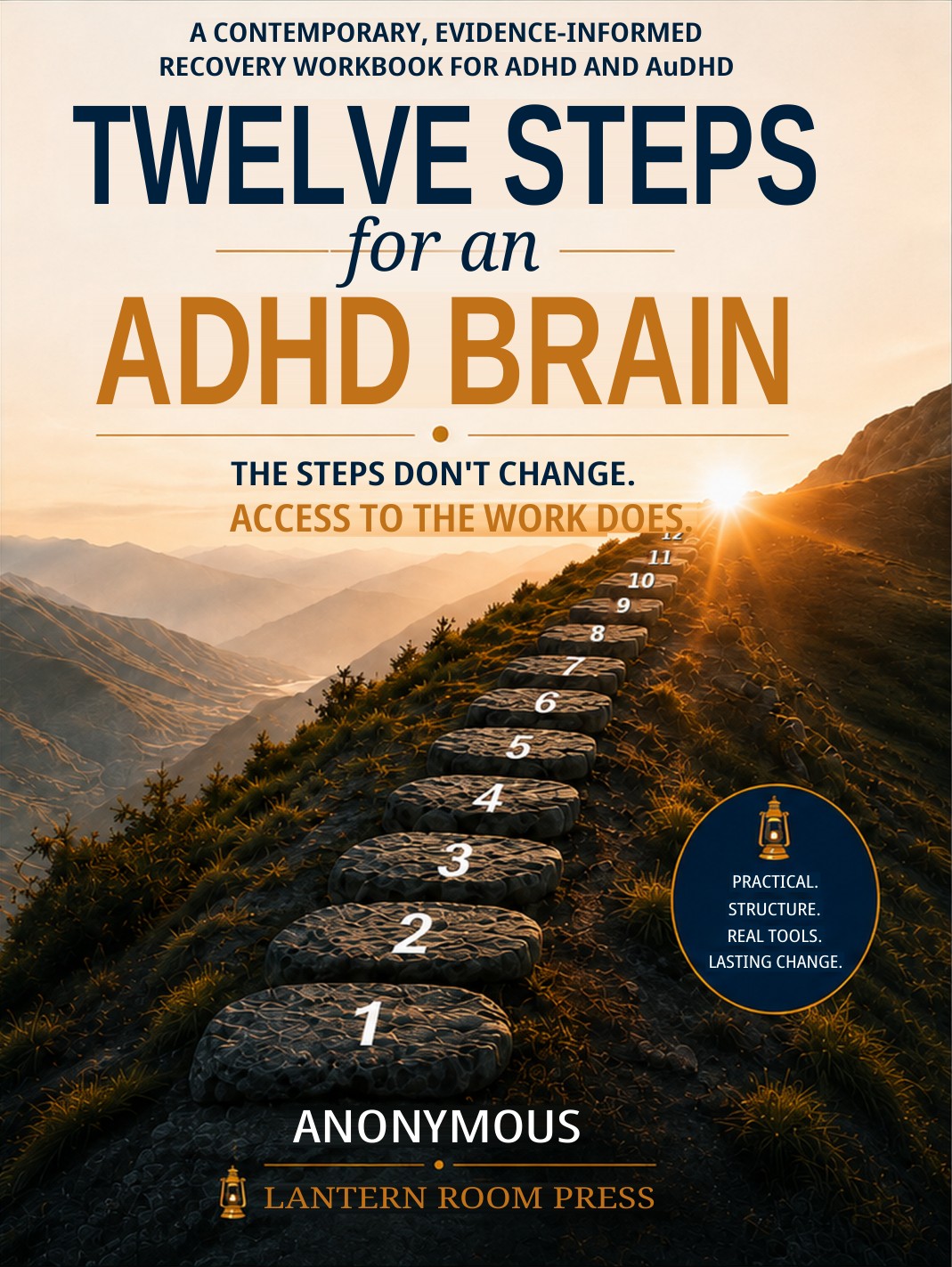
Forthcoming · In preparation
Complete edition
Twelve Step recovery, made workable for ADHD and AuDHD.
Recovery work asks us to remember, begin, reflect, follow through and return. This book makes those demands visible, with a structure designed around the attention, processing, sensory and capacity differences that can make the work harder to access.
The Complete Recovery System brings the guided Steps, practical recovery modules and reusable tools together with 12 original Collective Meeting Readings and all 365 Reflection Cards. Read for depth, work with one question, or use a smaller route when that is what today allows.
Choose this edition for the whole integrated system. The Workbook Edition focuses on the core written work; the reflection and reading companions put selected material into separate editions. Those publications overlap with this one. You do not need to buy them all.
Compare the recovery publicationsForthcoming · In preparation
Release date, formats and ordering details will be announced when confirmed.
Get new-release emailsIndependent recovery support. Not A.A. literature or a substitute for qualified care.
Back to all forthcoming publicationsDesigned for the reader
The Quick Start and Problem Router connect the difficulty you have today with a place to begin. Clear instructions and bounded tasks give a large piece of work a visible next step.
Low-Capacity routes, short-session options and Pause Points let you choose a manageable amount. You can read, write, type, dictate or work alongside an appropriate support person.
Written cues, reusable plans and a recorded restart point help keep the work available between sessions. Attention, time, initiation and follow-through are part of the design.
The book separates neurological impairment, trauma and support needs from harmful conduct. It makes room for understanding and accommodation while keeping honesty, responsibility and repair in view.
Higher Power explanations allow room for religious, spiritual, agnostic and atheist readers. Guidance around disclosure, trauma, consent and amends keeps personal safety and the roles of different supports clear.
Return routes and a recommitment plan make restarting part of the work. The reflection cards have no catch-up rule: a missed day does not create another backlog.
Beyond the Step chapters
The practical modules address the circumstances that can change how recovery work is carried out. You can turn to the relevant subject when it affects the work in front of you.
Research & clinical guidance
The ADHD and autism material draws on research and clinical guidance, including NICE’s ADHD guideline, NG87 and adult-autism guideline, CG142. These inform the book’s attention to impairment, environmental adjustments, communication, participation and appropriate support.
Clinical and safety references also include NICE’s alcohol-use guidance and the UK clinical guidelines for alcohol treatment. The book keeps professional care, peer support and workbook exercises in their proper roles.
Research, clinical guidance, lived experience and original practical tools are identified for what they contribute. The worksheets are independent applications of that material. These references do not imply NICE or NHS endorsement, or clinical validation of the recovery system.
See how the complete system fits together