Change the demand you actually face.
Demand triage separates the essential outcome from its current timing, method, standard or owner. It helps you look for a workable change even when the responsibility cannot disappear.

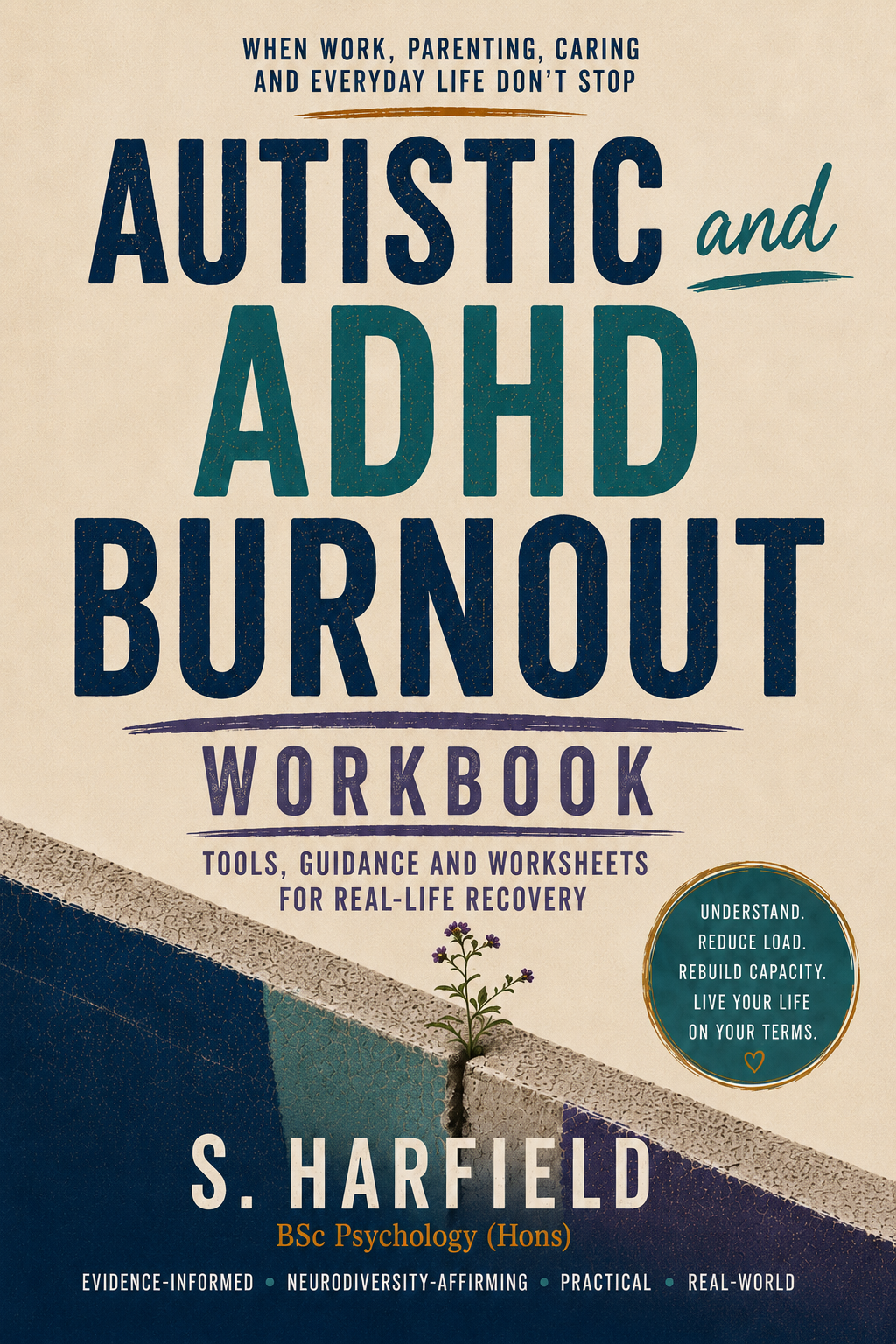
Forthcoming · In preparation
Standalone workbook
Tools, Guidance and Worksheets for Real-Life Recovery
Recovery when everyday life cannot simply stop.
Work still needs doing. Children still need care. Bills, meals and appointments do not disappear because capacity has fallen. This workbook begins with that reality.
It helps you examine what a demand actually requires, what can change about how it is carried, and where another person can take real ownership. Quick Start routes and optional worksheets let you enter at today’s problem, including when reading a whole chapter is too much.
An independent workbook about burnout, demands and everyday capacity. It is separate from the Twelve Steps collection and is not included in The Complete Recovery System.
Forthcoming · In preparation
Release date, formats and ordering details will be announced when confirmed.
Get new-release emailsAn educational and self-help publication for adults. It does not diagnose conditions or replace individual professional care.
Back to all forthcoming publicationsDesigned for the reader
Demand triage separates the essential outcome from its current timing, method, standard or owner. It helps you look for a workable change even when the responsibility cannot disappear.
Minimum Viable Functioning starts with a safe, smaller version of what needs to happen. Low-Capacity routes offer a stopping point when planning more would use capacity you do not have.
The book examines real load transfer: another person taking ownership of work, including the coordination it requires. It helps you identify what support would need to carry.
Recovery planning considers recurring demands, helpful supports and setbacks. More capacity becomes an opportunity to review the load before automatically restoring every previous demand.
Evidence-informed practice
The workbook distinguishes research findings, official guidance, lived experience and its own practical frameworks. Evidence about autistic burnout, ADHD-related exhaustion and the overlap between autism and ADHD is kept distinct, with uncertainty made visible.
References include NICE ADHD guidance and NICE adult-autism guidance where assessment, support and access are relevant. Those sources are not dedicated burnout-treatment guidelines and do not endorse this workbook.
Optional worksheets, low-capacity stopping points and a personal plan support practical reflection. The book does not promise a fixed recovery timetable or replace assessment when a significant change in health or functioning needs it.